


Smarter Training For Lasting Performance
A personalized assessment of how your body responds
to training demand, recovers from load,
and builds long-term resilience

Performance starts with energy allocation
Your body is constantly gauging stress on the system and deciding where energy goes: training, recovery, adaptation.
Too little physiological demand and adaptation stalls. Too much demand and the system begins to loose capacity.
Understanding your stress allocation helps you understand whether your biology is supporting your goals or limiting them.
Stress isn't the enemy. It's the signal
When you understand your body’s molecular response, you unlock a path towards smarter training and lasting performance.
Understanding Your Molecular Response To Stress Means Knowing:
What you will learn:

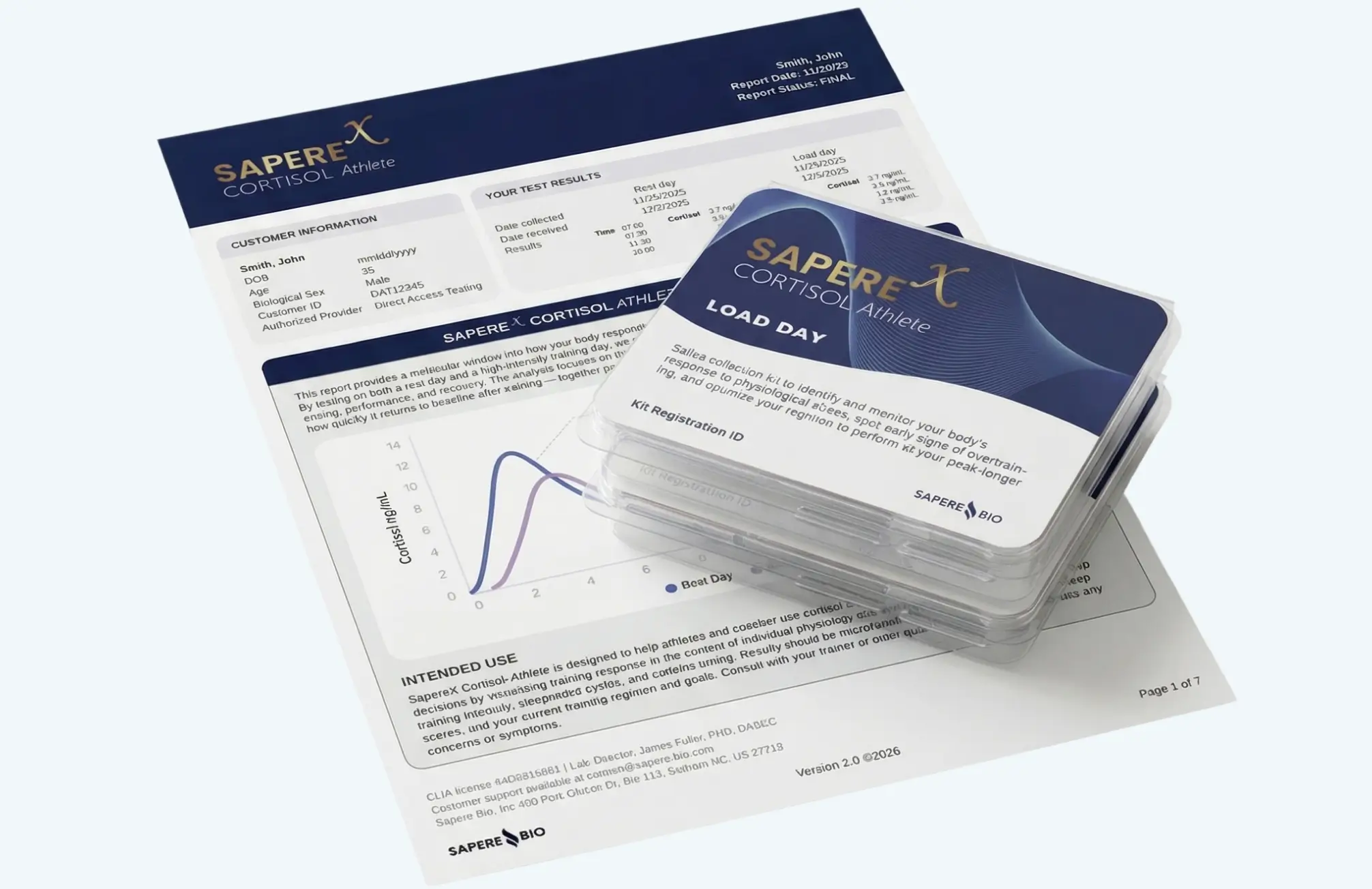
Saperex Cortisol Athlete


SapereX Cortisol Athlete is a two-day saliva test designed to show how your body responds to trainign demand. You test on a rest day and a load day to see how you regulate and deploy energy. The results help you visualize baseline physiology, response to training, and recovery through molecular data.
Repeat testing across training blocks gives you the most meaningful insight, helping you confirm whether the adjustments you're making are moving you in the right direction.
The SapereX approach gives athletes, coaches, and other professionals objective data to guide programming, recovery planning, and performance optimization.
Understand Where You Stand
How is my body adapting to my training load?
Does my molecular profile show signs of over-training?
Do I have room to push harder?
Measure What Changed
Is my body continuing to adapt effectively?
Did my recent training changes improve my profile?
Am I ready to take my program to the next level?
Built for Athletes & Performance Professionals
Designed for people who need molecular insights into training, recovery, adaptation, and long-term resilience, including:
From Testing to Understanding
Order - U.S. only
Collect saliva — 4 samples per day, across two days
Ship next day for analysis
Receive results in ~2 weeks
Retest in 8-12 weeks to compare patterns across training blocks
When you Need More Than Cortisol
Available exclusively through clinical providers
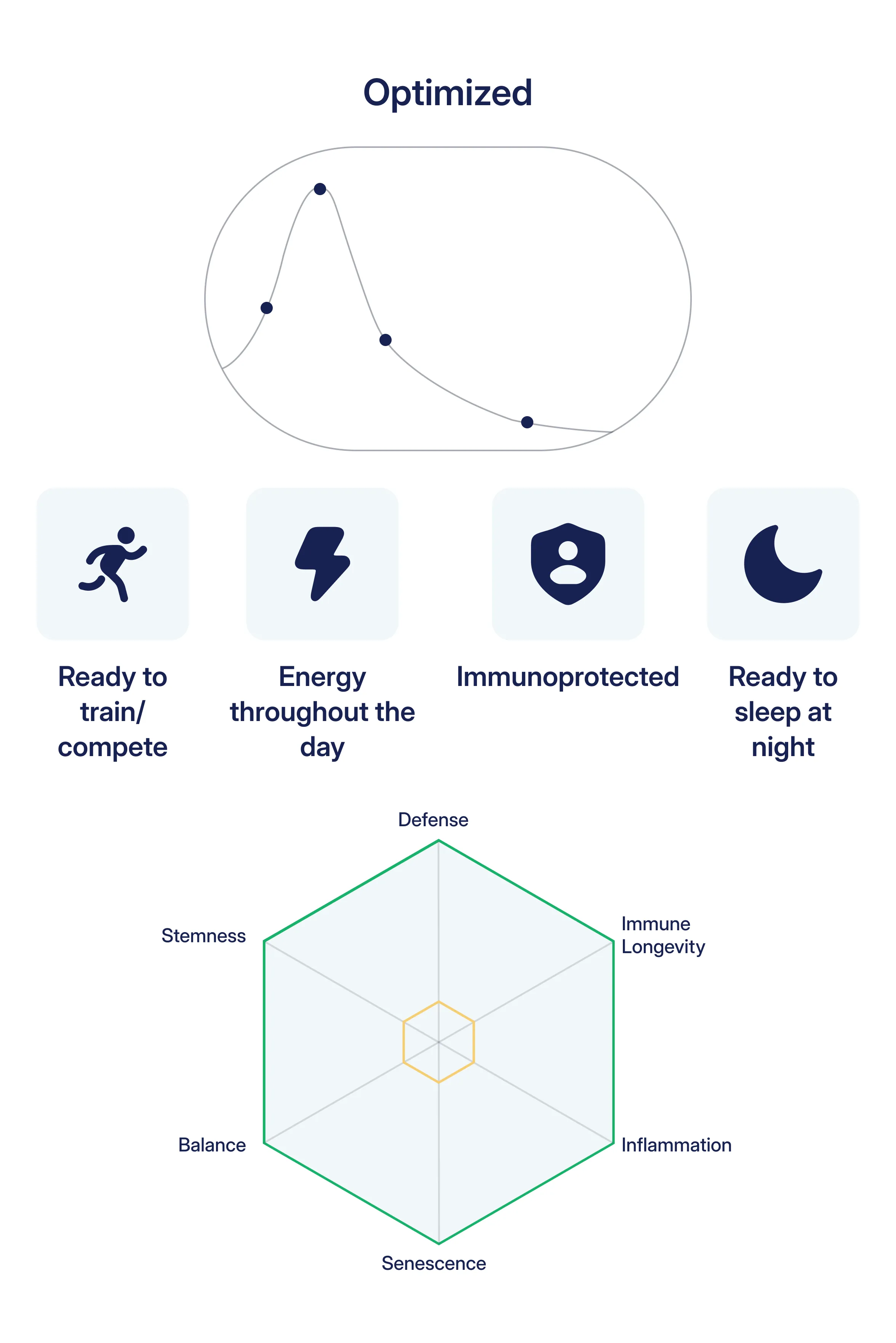
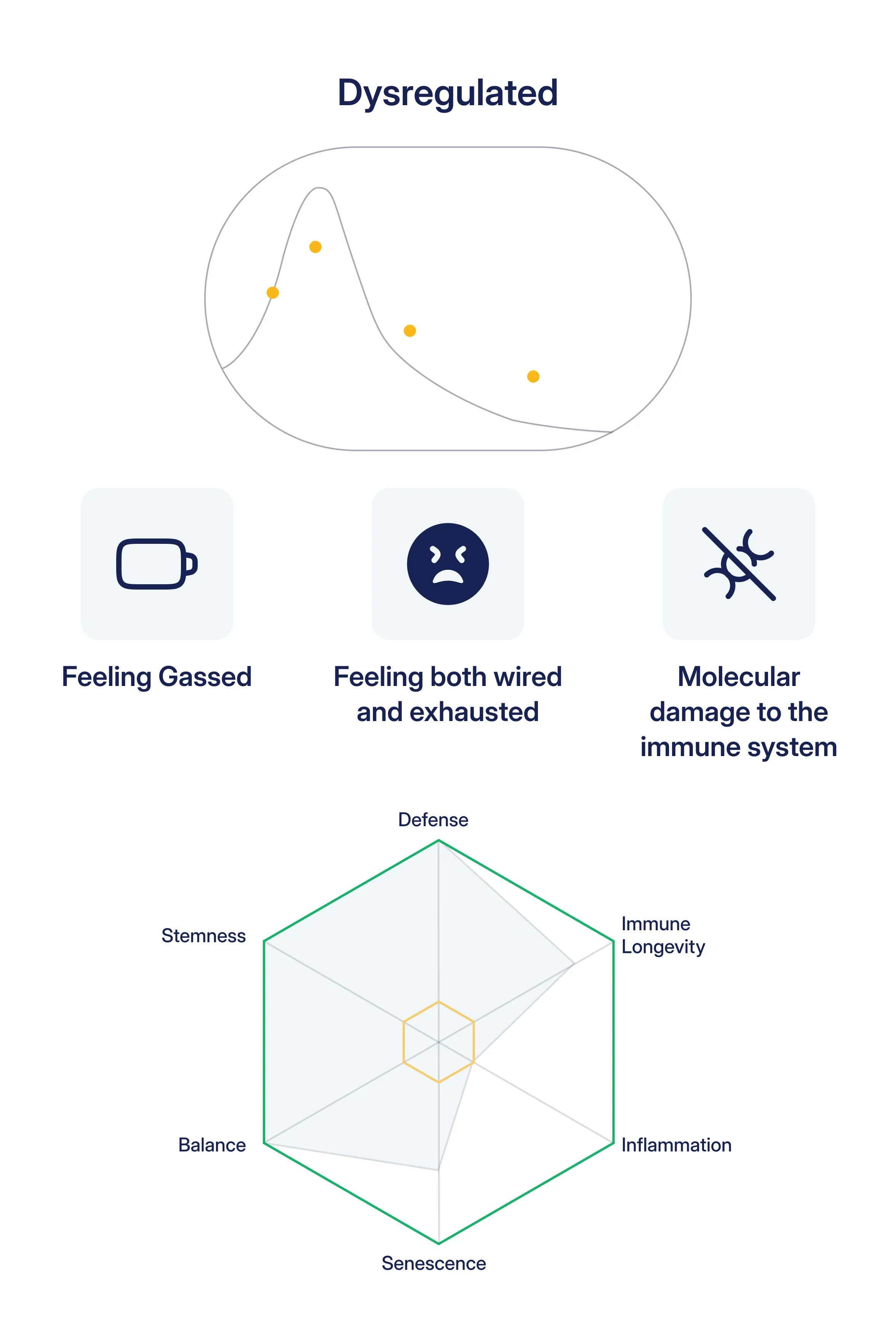
SapereX Endurance expands beyond training response to evaluate immune resilience, cellular senescence, and long-term physiological adaption
SapereX Endurance is ideal when:

Compare SapereX Assessments


Key References
- Miller R, et al. The CIRCORT database: Reference ranges and seasonal changes in diurnal salivary cortisol derived from a meta-dataset comprised of 15 field studies. Psychoneuroendocrinology. 2016.
- Anderson T, Wideman L. Exercise and the Cortisol Awakening Response: A Systematic Review. Sports Medicine. 2017.
- MacDonald D, Wetherell MA. Competition Stress Leads to a Blunting of the Cortisol Awakening Response in Elite Rowers. Front Psychol. 2019.
- Anderson T, et al. Examining Internal and External Physical Workloads Between Training and Competitive Matches Within Collegiate Division | Men's Soccer. J Strength Cond Res. 2021.
- Anderson T, et al. The impact of prior day sleep and physical activity on the cortisol awakening response. Psychoneuroendocrinology. 2021.
- Minetto MA, et al. Changes in awakening Cortisol response and midnight salivary Cortisol are sensitive markers of strenuous training-induced fatigue. J Endocrinol Invest. 2008.
- Anderson T, et al. The effect of acute exercise on the cortisol awakening response. Eur J Appl Physiol. 2023.
- Chellappa SL. "Individual differences in light sensitivity affect sleep and circadian rhythms", Sleep. 2021
- Petrowski K, et al. "The Effects of Post-Awakening Light Exposure on the Cortisol Awakening Response in Healthy Male Individuals", Psychoneuroendocrinology. 2019
- Brown TM., et al. "Recommendations for Daytime, Evening, and Nighttime Indoor Light Exposure to Best Support Physiology, Sleep, and Wakefulness in Healthy Adults", PLOS Biology. 2022
- Wilhelm, et al. "Is the Cortisol Awakening Rise a Response to Awakening?", Psychoneuroendocrinology. 2007
- Athanasiou N., Matos, N. "Endocrine Responses of the Stress System to Different Types of Exercise", Reviews in Endocrine and Metabolic Disorders. 2022
- Gavrieli A, et al. "Caffeinated Coffee Does Not Acutely Affect Energy Intake, Appetite, or Inflammation but Prevents Serum Cortisol Concentrations from Falling in Healthy Men", The Journal of Nutrition. 2011
- Lovallo WR., et al. "Caffeine Stimulation of Cortisol Secretion Across the Waking Hours in Relation to Caffeine Intake Levels", Psychosomatic Medicine. 2005
- Chandrasekha K, et al. "A Prospective, Randomized Double-Blind, Placebo-Controlled Study of Safety and Ecacy of a High-Concentration Full-Spectrum Extract of Ashwagandha Root in Reducing Stress and Anxiety in Adults", Indian Journal of Psychological Medicine. 2012
- Weakley J, et al. "Overtraining Syndrome Symptoms and Diagnosis in Athletes: Where Is the Research? A Systematic Review", International Journal of Sports Physiology and Performance. 2022
- Kreher JB, Schwartz, JB. "Overtraining Syndrome: A Practical Guide", Sports Health. 2012
- Winsley R, Matos N. "Overtraining and Elite Young Athletes", Medicine and Sport Science. 2011
- Symons IK, et al. "Impact of Overtraining on Cognitive Function in Endurance Athletes: A Systematic Review", Sports Medicine. 2023