



Discover how your body responds to training, recovers,
and allocates energy across the day

Training creates demand. Recovery creates adaptation.
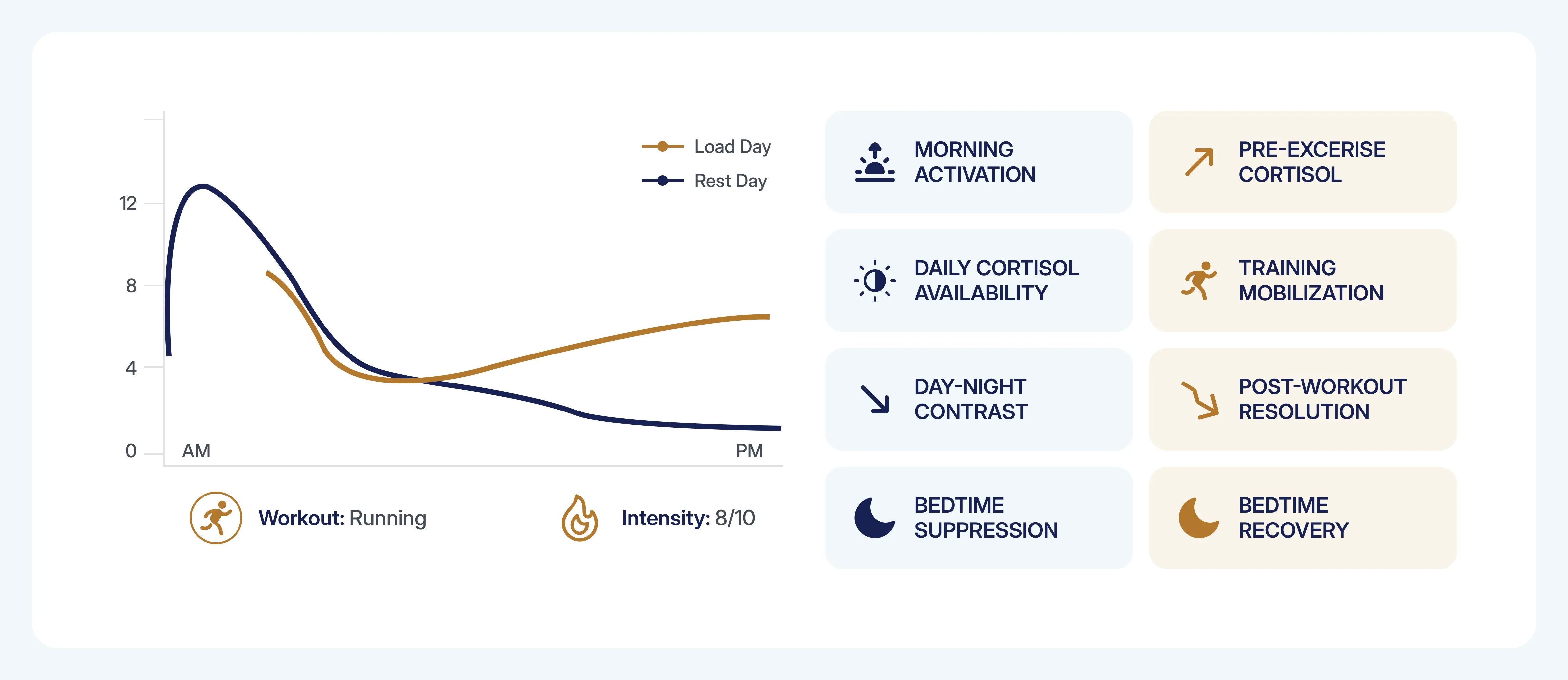
Your body manages that balance constantly, in ways pace, power, heart rate, and HRV don't show. SapereX Cortisol Athlete gives you a personalized read of it

See How Your Body Responds to Training Demand
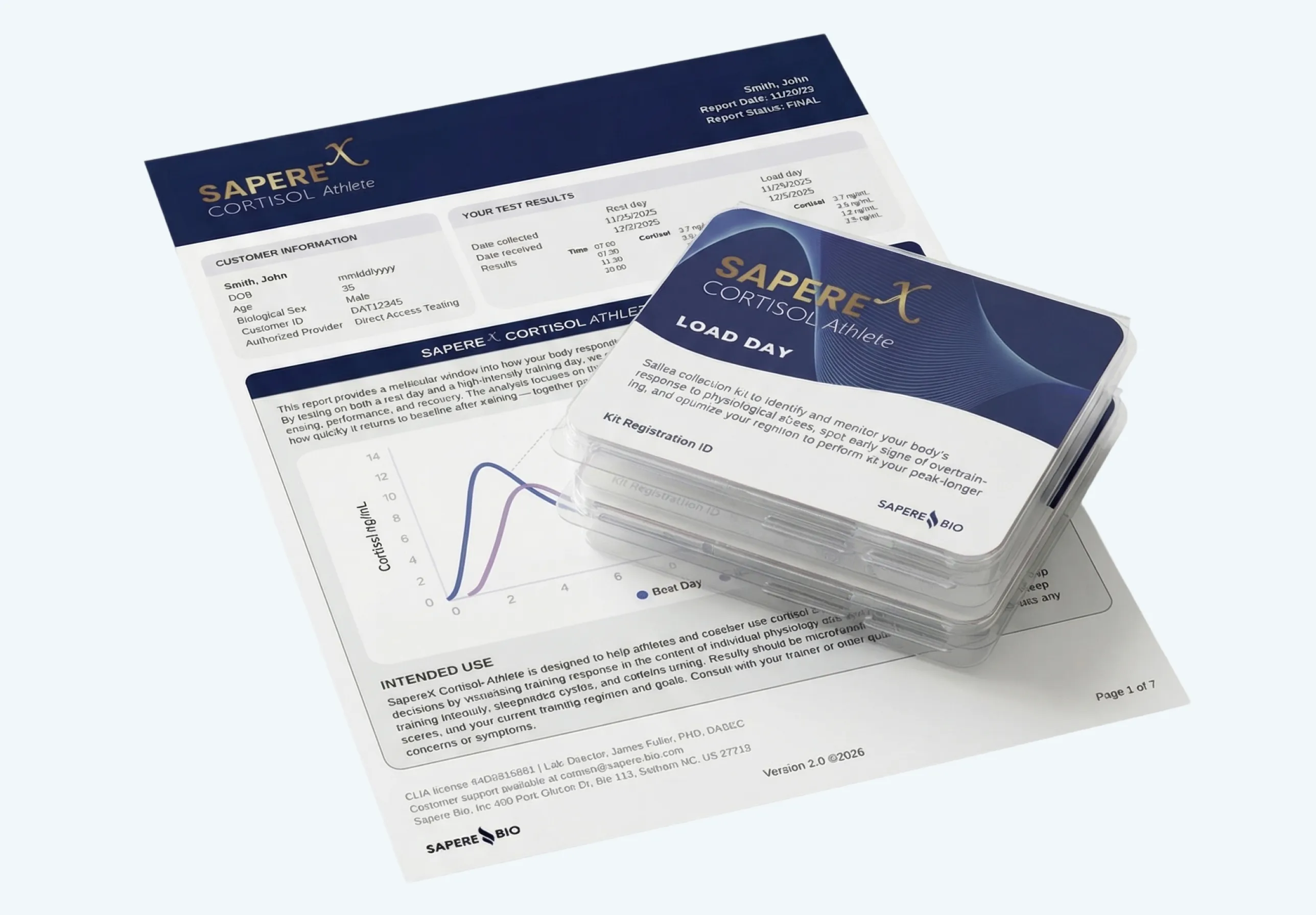
$399 includes testing, analysis, and your personalized report
Understand Where You Stand
How is my body adapting to my training load?
Does my molecular profile show signs of over-training?
Do I have room to push harder?
Measure What Changed
Is my body continuing to adapt effectively?
Did my recent training changes improve my profile?
Am I ready to take my program to the next level?
What you will get with SapereX Cortisol Athlete?

Testing supplies:
 Easy to understand instructions
- Saliva collection tubes for two days of testing (rest + load)
- Access to simple digital forms that capture your training details and day-of-collection context for more personalized insights
- Pre-paid return envelope
Frequently Asked Questions
You’ll test on two separate days, a rest day (defined as low intensity training or a true rest day) and a load day (a day of high intensity training or competition). Timepoints are specified in our easy-to-understand collection instructions.


No. In fact, we recommend maintaining your common routines. The night before collection, re-read the instructions. Place a tube and a pen on your nightstand to collect your first saliva sample immediately after waking.
Not right away. You must collect your two morning samples (within 30 minutes) before having coffee or any other food or drink.
Avoid food and drinks other than water for 30 minutes prior to collecting each sample.
For morning collections, do not brush your teeth before collecting. You can brush afterward.
Each sample should be collected within about five minutes.
Fill each small tube at least half-way.
Smelling food, yawning, or gently pressing your tongue against your teeth can help stimulate saliva flow.
Choose another day. On the rest day, your first sample must be taken within five minutes of waking. If you miss that window,collect on a different rest day.
Start again on another day. Rinse the tubes with hot water (no soap), let them air dry completely, and collect all four samples on a new day.
You do not need to register your kit separately. After you’ve collected your samples and before shipping them to the lab, please complete the online sample submission form. Your samples will not be processed without the completed form.
Yes—especially if you’ve made changes to your training or recovery strategy. Re-testing after an 8–12 week training block allows you to see whether your physiology is adapting as you intended.
Key References
- Miller R, et al. The CIRCORT database: Reference ranges and seasonal changes in diurnal salivary cortisol derived from a meta-dataset comprised of 15 field studies. Psychoneuroendocrinology. 2016.
- Anderson T, Wideman L. Exercise and the Cortisol Awakening Response: A Systematic Review. Sports Medicine. 2017.
- MacDonald D, Wetherell MA. Competition Stress Leads to a Blunting of the Cortisol Awakening Response in Elite Rowers. Front Psychol. 2019.
- Anderson T, et al. Examining Internal and External Physical Workloads Between Training and Competitive Matches Within Collegiate Division | Men's Soccer. J Strength Cond Res. 2021.
- Anderson T, et al. The impact of prior day sleep and physical activity on the cortisol awakening response. Psychoneuroendocrinology. 2021.
- Minetto MA, et al. Changes in awakening Cortisol response and midnight salivary Cortisol are sensitive markers of strenuous training-induced fatigue. J Endocrinol Invest. 2008.
- Anderson T, et al. The effect of acute exercise on the cortisol awakening response. Eur J Appl Physiol. 2023.
- Chellappa SL. "Individual differences in light sensitivity affect sleep and circadian rhythms", Sleep. 2021
- Petrowski K, et al. "The Effects of Post-Awakening Light Exposure on the Cortisol Awakening Response in Healthy Male Individuals", Psychoneuroendocrinology. 2019
- Brown TM., et al. "Recommendations for Daytime, Evening, and Nighttime Indoor Light Exposure to Best Support Physiology, Sleep, and Wakefulness in Healthy Adults", PLOS Biology. 2022
- Wilhelm, et al. "Is the Cortisol Awakening Rise a Response to Awakening?", Psychoneuroendocrinology. 2007
- Athanasiou N., Matos, N. "Endocrine Responses of the Stress System to Different Types of Exercise", Reviews in Endocrine and Metabolic Disorders. 2022
- Gavrieli A, et al. "Caffeinated Coffee Does Not Acutely Affect Energy Intake, Appetite, or Inflammation but Prevents Serum Cortisol Concentrations from Falling in Healthy Men", The Journal of Nutrition. 2011
- Lovallo WR., et al. "Caffeine Stimulation of Cortisol Secretion Across the Waking Hours in Relation to Caffeine Intake Levels", Psychosomatic Medicine. 2005
- Chandrasekha K, et al. "A Prospective, Randomized Double-Blind, Placebo-Controlled Study of Safety and Ecacy of a High-Concentration Full-Spectrum Extract of Ashwagandha Root in Reducing Stress and Anxiety in Adults", Indian Journal of Psychological Medicine. 2012
- Weakley J, et al. "Overtraining Syndrome Symptoms and Diagnosis in Athletes: Where Is the Research? A Systematic Review", International Journal of Sports Physiology and Performance. 2022
- Kreher JB, Schwartz, JB. "Overtraining Syndrome: A Practical Guide", Sports Health. 2012
- Winsley R, Matos N. "Overtraining and Elite Young Athletes", Medicine and Sport Science. 2011
- Symons IK, et al. "Impact of Overtraining on Cognitive Function in Endurance Athletes: A Systematic Review", Sports Medicine. 2023